Organic Pearl Millet (Bajra / Sajje) – Unpolished
Enjoy the wholesome goodness and rich flavor of Organic Mandya Pearl Millet in your meals and embrace a healthier, more nutritious diet.
Healthy Organic Mandya Pearl Millet vs. Regular Processed Grains
Switch to our Pearl Millet for superior health benefits.
| Feature | Healthy Organic Mandya Pearl Millet | Regular Processed Grains |
|---|---|---|
| Origin & Sourcing | Direct from Organic Mandya | Unknown origin |
| Nutrient Profile | Rich in essential minerals | Stripped of nutrients |
| Additives & Chemicals | Zero chemicals used | Contains preservatives |
| Digestive Impact | Easy on the gut | Bloating and heaviness |
| Authentic Heritage | Ancient grain variety | Modern hybrid grain |
Bajra is the most iron-rich grain in the Indian kitchen. It is also the hardiest - it grows where almost nothing else will, on 300- 500 mm of rain, in soil and heat that would kill rice or wheat.
Small, round, grey-white grains with a warm, nutty flavour. Ours are grown organically and left unpolished, so the bran layer stays on the grain.
Also known as: sajje (Kannada), kambu (Tamil), sajjalu (Telugu), bajra (Hindi, Marathi, Gujarati, Rajasthani), bajri.
The Most Iron-Rich Grain In Your Kitchen At 8mg of iron per 100g, bajra carries more iron than any other common Indian grain:
|
Food (Per 100 g) |
Iron |
|
Bajra (Pearl Millet) |
8.0 mg |
|
Jowar (Sorghum) |
4.1 mg |
|
Ragi (Finger Millet) |
3.9 mg |
|
Foxtail Millet |
2.8 mg |
|
Beef (for comparison) |
2.7 mg |
Iron from plants is non-haem iron, which the body absorbs less readily than iron from meat. Absorption improves substantially when it is eaten alongside vitamin C.
Which is why bajra roti has always been served with raw onion and green chilli in Rajasthan, and with a tomato preparation elsewhere. The tradition arrived at the science on its own.
At 3.1mg per 100g, bajra also provides 28% of your daily zinc - unusual in a plant food, where zinc is normally locked up by phytic acid.
Nutritional information is provided for general educational purposes only. Bajra (Pearl Millet) is a nutritious food, not a medicine, and is not intended to diagnose, treat, cure, or prevent any disease. If you have a medical condition or specific dietary requirements, consult your doctor or a qualified healthcare professional before making significant changes to your diet.
Ayurvedic texts classify bajra as ushna virya - warming. Traditional food culture across Rajasthan, Gujarat and northern Karnataka eats bajra through the cold months, roughly October to February, and sets it aside in summer.
There is a plain reason behind the custom. At 361 kcal per 100g, bajra is the most calorie-dense of all the millets, and its higher fat content (5g per 100g, against ragi's 1.3g and jowar's 1.9g) releases energy slowly and generates more metabolic heat during digestion.
That density is not a drawback. For farmers, for manual work, for growing children, and for anyone who needs sustained energy in cold weather, it is precisely the point.
Product Information
Product Information
Shipping & Returns
Shipping & Returns


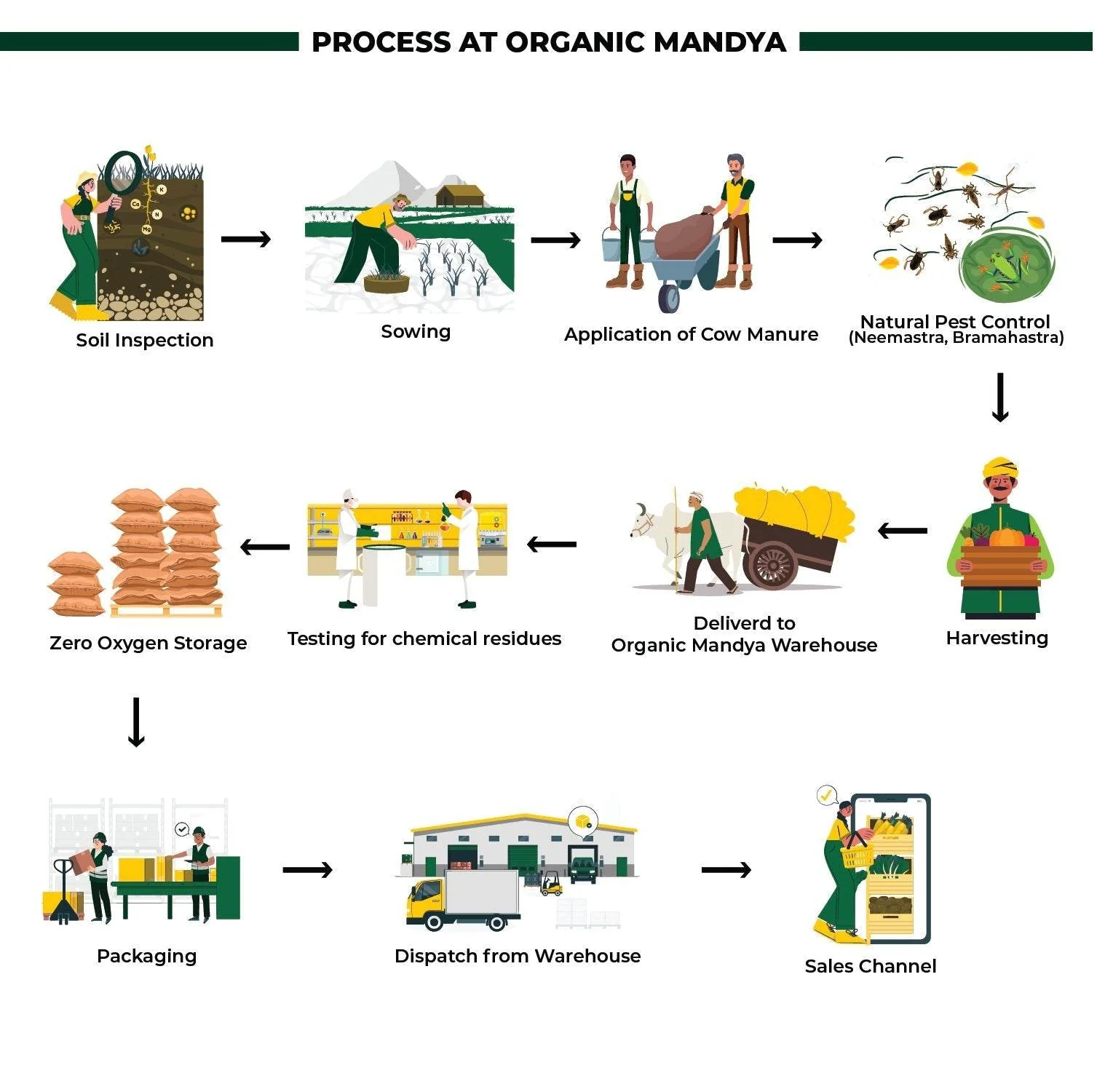
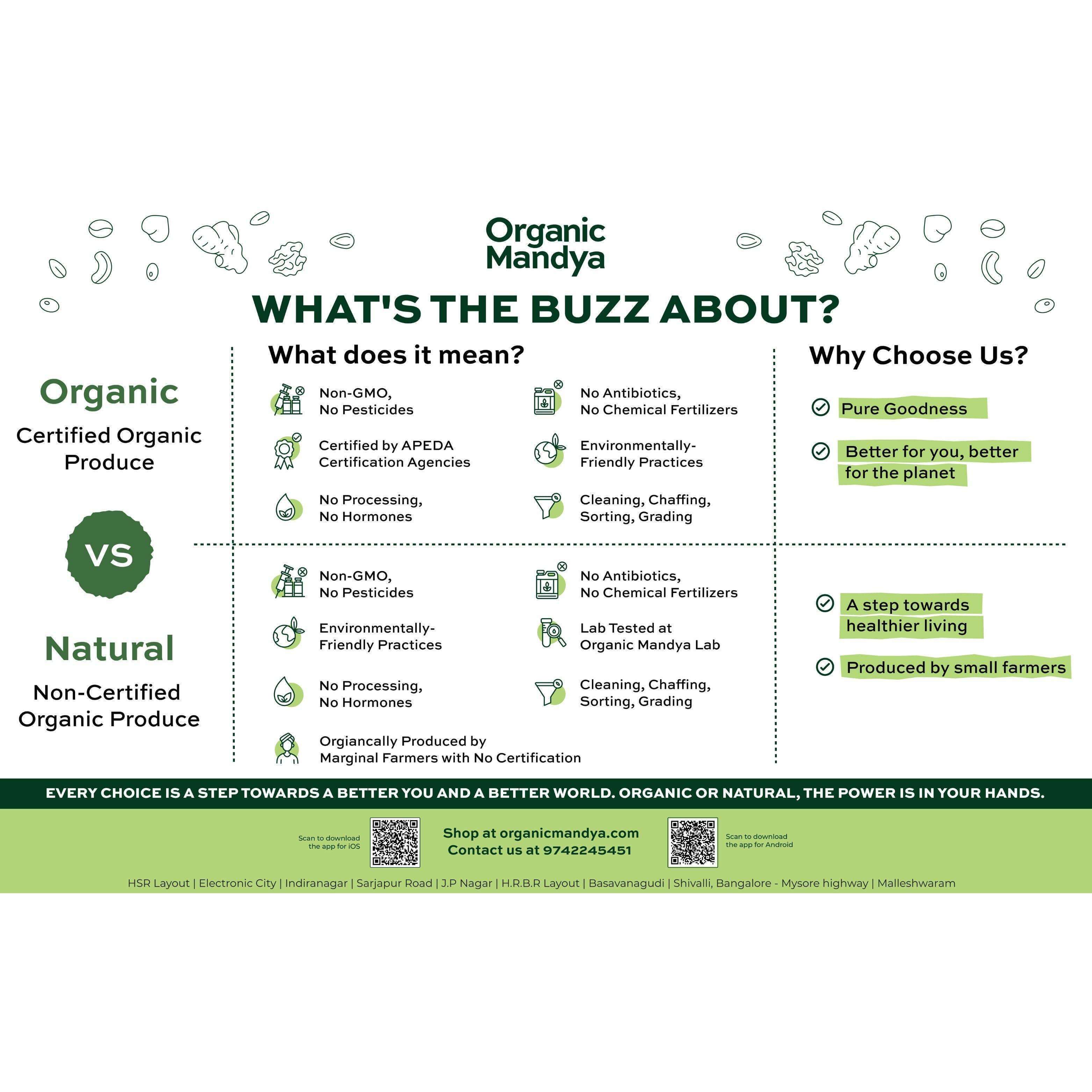
Organic Pearl Millet (Bajra / Sajje) – Unpolished
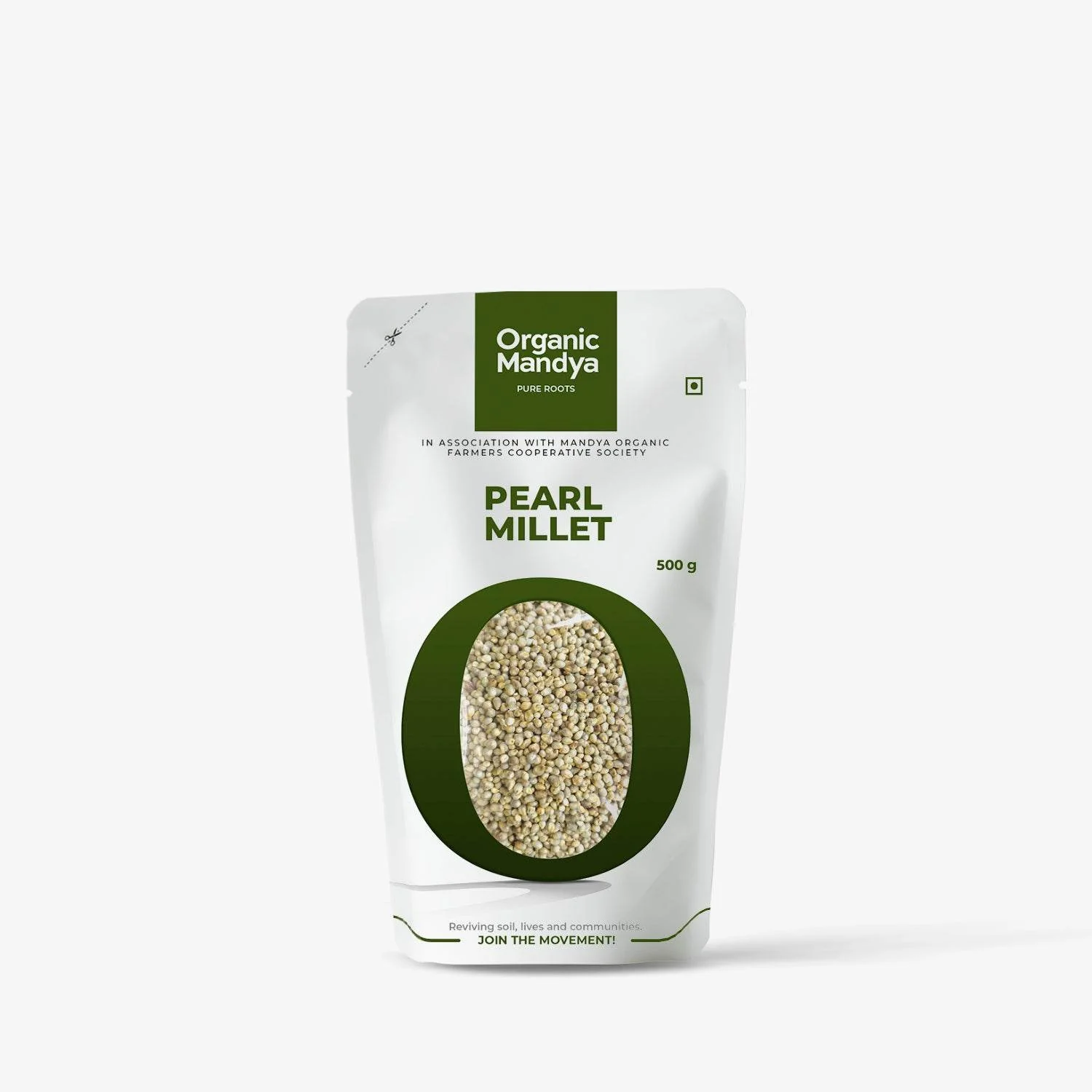
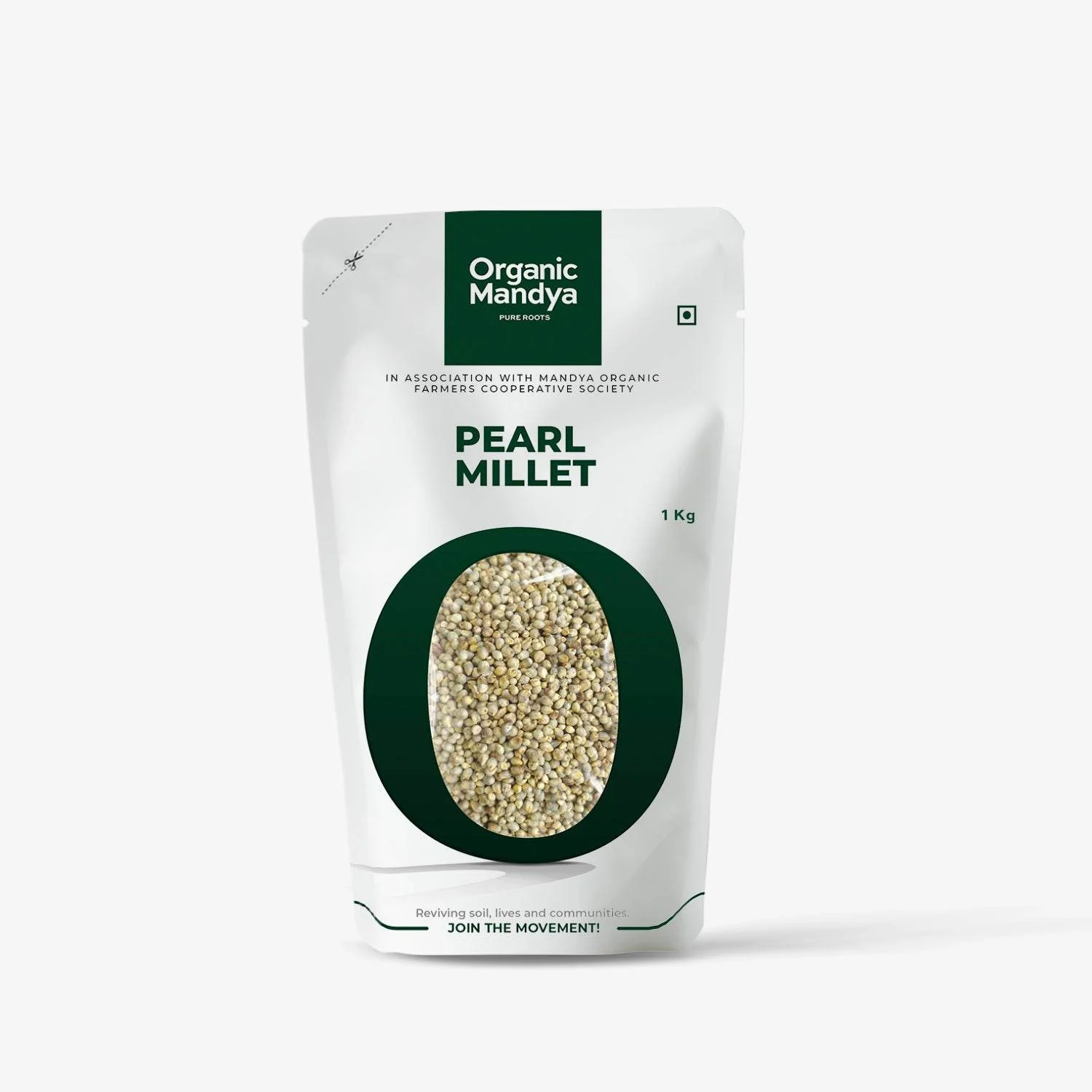
Organic Pearl Millet (Bajra / Sajje) – Unpolished
Enjoy the wholesome goodness and rich flavor of Organic Mandya Pearl Millet in your meals and embrace a healthier, more nutritious diet.
Healthy Organic Mandya Pearl Millet vs. Regular Processed Grains
Switch to our Pearl Millet for superior health benefits.
| Feature | Healthy Organic Mandya Pearl Millet | Regular Processed Grains |
|---|---|---|
| Origin & Sourcing | Direct from Organic Mandya | Unknown origin |
| Nutrient Profile | Rich in essential minerals | Stripped of nutrients |
| Additives & Chemicals | Zero chemicals used | Contains preservatives |
| Digestive Impact | Easy on the gut | Bloating and heaviness |
| Authentic Heritage | Ancient grain variety | Modern hybrid grain |
Bajra is the most iron-rich grain in the Indian kitchen. It is also the hardiest - it grows where almost nothing else will, on 300- 500 mm of rain, in soil and heat that would kill rice or wheat.
Small, round, grey-white grains with a warm, nutty flavour. Ours are grown organically and left unpolished, so the bran layer stays on the grain.
Also known as: sajje (Kannada), kambu (Tamil), sajjalu (Telugu), bajra (Hindi, Marathi, Gujarati, Rajasthani), bajri.
The Most Iron-Rich Grain In Your Kitchen At 8mg of iron per 100g, bajra carries more iron than any other common Indian grain:
|
Food (Per 100 g) |
Iron |
|
Bajra (Pearl Millet) |
8.0 mg |
|
Jowar (Sorghum) |
4.1 mg |
|
Ragi (Finger Millet) |
3.9 mg |
|
Foxtail Millet |
2.8 mg |
|
Beef (for comparison) |
2.7 mg |
Iron from plants is non-haem iron, which the body absorbs less readily than iron from meat. Absorption improves substantially when it is eaten alongside vitamin C.
Which is why bajra roti has always been served with raw onion and green chilli in Rajasthan, and with a tomato preparation elsewhere. The tradition arrived at the science on its own.
At 3.1mg per 100g, bajra also provides 28% of your daily zinc - unusual in a plant food, where zinc is normally locked up by phytic acid.
Nutritional information is provided for general educational purposes only. Bajra (Pearl Millet) is a nutritious food, not a medicine, and is not intended to diagnose, treat, cure, or prevent any disease. If you have a medical condition or specific dietary requirements, consult your doctor or a qualified healthcare professional before making significant changes to your diet.
Ayurvedic texts classify bajra as ushna virya - warming. Traditional food culture across Rajasthan, Gujarat and northern Karnataka eats bajra through the cold months, roughly October to February, and sets it aside in summer.
There is a plain reason behind the custom. At 361 kcal per 100g, bajra is the most calorie-dense of all the millets, and its higher fat content (5g per 100g, against ragi's 1.3g and jowar's 1.9g) releases energy slowly and generates more metabolic heat during digestion.
That density is not a drawback. For farmers, for manual work, for growing children, and for anyone who needs sustained energy in cold weather, it is precisely the point.
Product Information
Product Information
Shipping & Returns
Shipping & Returns
Description
Enjoy the wholesome goodness and rich flavor of Organic Mandya Pearl Millet in your meals and embrace a healthier, more nutritious diet.
Healthy Organic Mandya Pearl Millet vs. Regular Processed Grains
Switch to our Pearl Millet for superior health benefits.
| Feature | Healthy Organic Mandya Pearl Millet | Regular Processed Grains |
|---|---|---|
| Origin & Sourcing | Direct from Organic Mandya | Unknown origin |
| Nutrient Profile | Rich in essential minerals | Stripped of nutrients |
| Additives & Chemicals | Zero chemicals used | Contains preservatives |
| Digestive Impact | Easy on the gut | Bloating and heaviness |
| Authentic Heritage | Ancient grain variety | Modern hybrid grain |
Bajra is the most iron-rich grain in the Indian kitchen. It is also the hardiest - it grows where almost nothing else will, on 300- 500 mm of rain, in soil and heat that would kill rice or wheat.
Small, round, grey-white grains with a warm, nutty flavour. Ours are grown organically and left unpolished, so the bran layer stays on the grain.
Also known as: sajje (Kannada), kambu (Tamil), sajjalu (Telugu), bajra (Hindi, Marathi, Gujarati, Rajasthani), bajri.
The Most Iron-Rich Grain In Your Kitchen At 8mg of iron per 100g, bajra carries more iron than any other common Indian grain:
|
Food (Per 100 g) |
Iron |
|
Bajra (Pearl Millet) |
8.0 mg |
|
Jowar (Sorghum) |
4.1 mg |
|
Ragi (Finger Millet) |
3.9 mg |
|
Foxtail Millet |
2.8 mg |
|
Beef (for comparison) |
2.7 mg |
Iron from plants is non-haem iron, which the body absorbs less readily than iron from meat. Absorption improves substantially when it is eaten alongside vitamin C.
Which is why bajra roti has always been served with raw onion and green chilli in Rajasthan, and with a tomato preparation elsewhere. The tradition arrived at the science on its own.
At 3.1mg per 100g, bajra also provides 28% of your daily zinc - unusual in a plant food, where zinc is normally locked up by phytic acid.
Nutritional information is provided for general educational purposes only. Bajra (Pearl Millet) is a nutritious food, not a medicine, and is not intended to diagnose, treat, cure, or prevent any disease. If you have a medical condition or specific dietary requirements, consult your doctor or a qualified healthcare professional before making significant changes to your diet.
Ayurvedic texts classify bajra as ushna virya - warming. Traditional food culture across Rajasthan, Gujarat and northern Karnataka eats bajra through the cold months, roughly October to February, and sets it aside in summer.
There is a plain reason behind the custom. At 361 kcal per 100g, bajra is the most calorie-dense of all the millets, and its higher fat content (5g per 100g, against ragi's 1.3g and jowar's 1.9g) releases energy slowly and generates more metabolic heat during digestion.
That density is not a drawback. For farmers, for manual work, for growing children, and for anyone who needs sustained energy in cold weather, it is precisely the point.